Total Lunar Eclipse - March 13-14, 2025
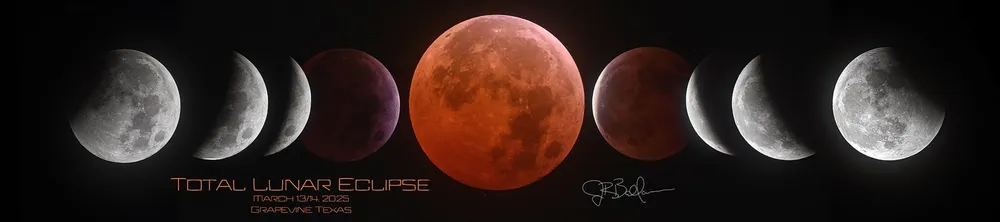
Click to Zoom
Equipment: Takahashi TOA-150 apochromatic refractor on an iOptron CEM60ec mount, Nikon D810a DSLR
Exposure: 290+ individual frames captured through the night; 9 combined into the composite above
A composite showing the full progression of the March 13-14, 2025 total lunar eclipse, shot right from home in Grapevine, Texas. No need to travel for this one — the whole event, start to finish, played out overhead on a clear March night.
The moon was tracked continuously through an intervalometer-driven sequence of 290+ exposures, from the first bite of the penumbra through totality and back out again. Nine frames from that sequence, evenly spaced, make up the composite above — arranged in a single row radiating outward from totality at the center, with the exposure time climbing steeply toward the middle of the sequence as the moon dims from a fully-lit disk to a dim red ember and back again.
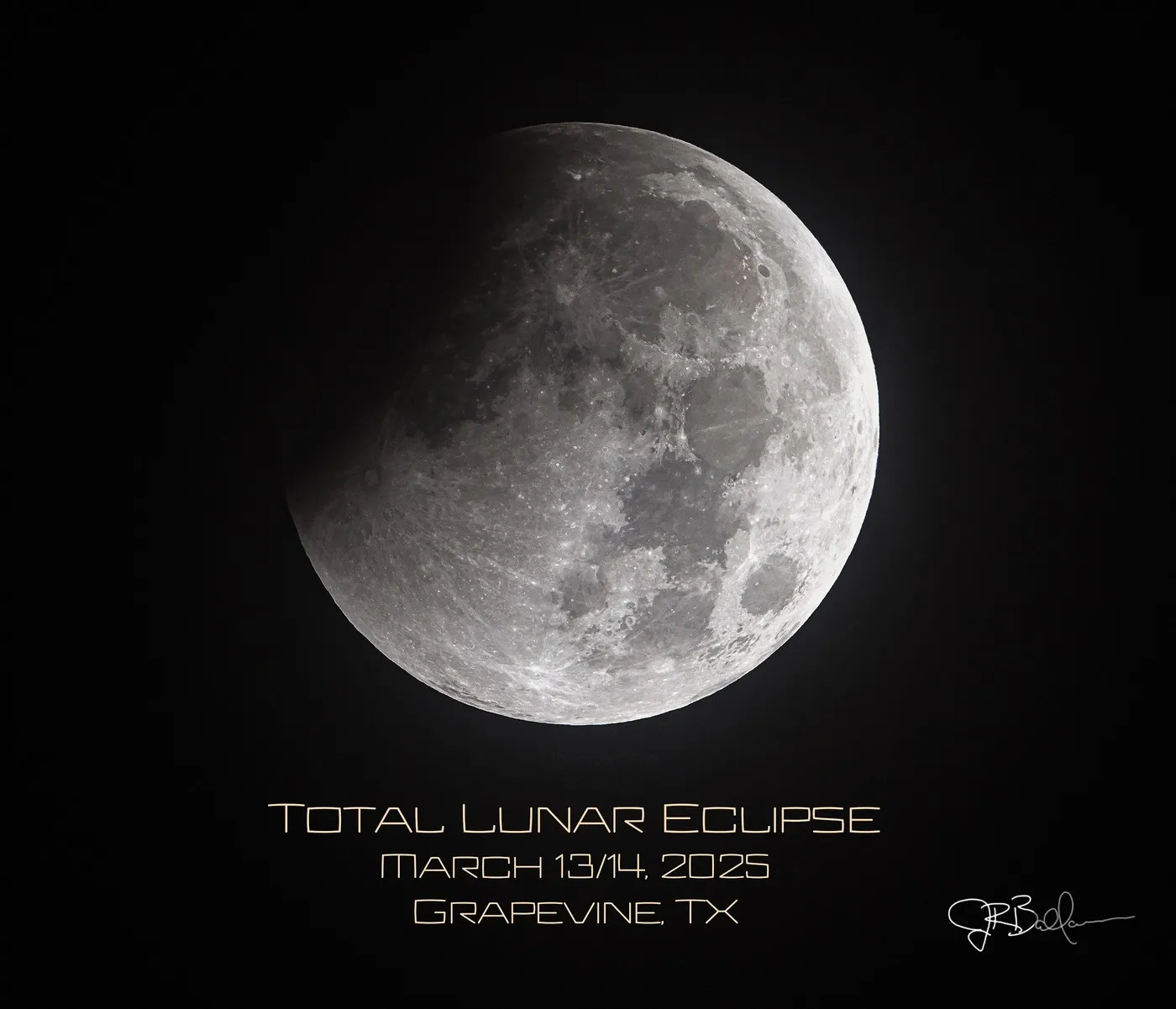
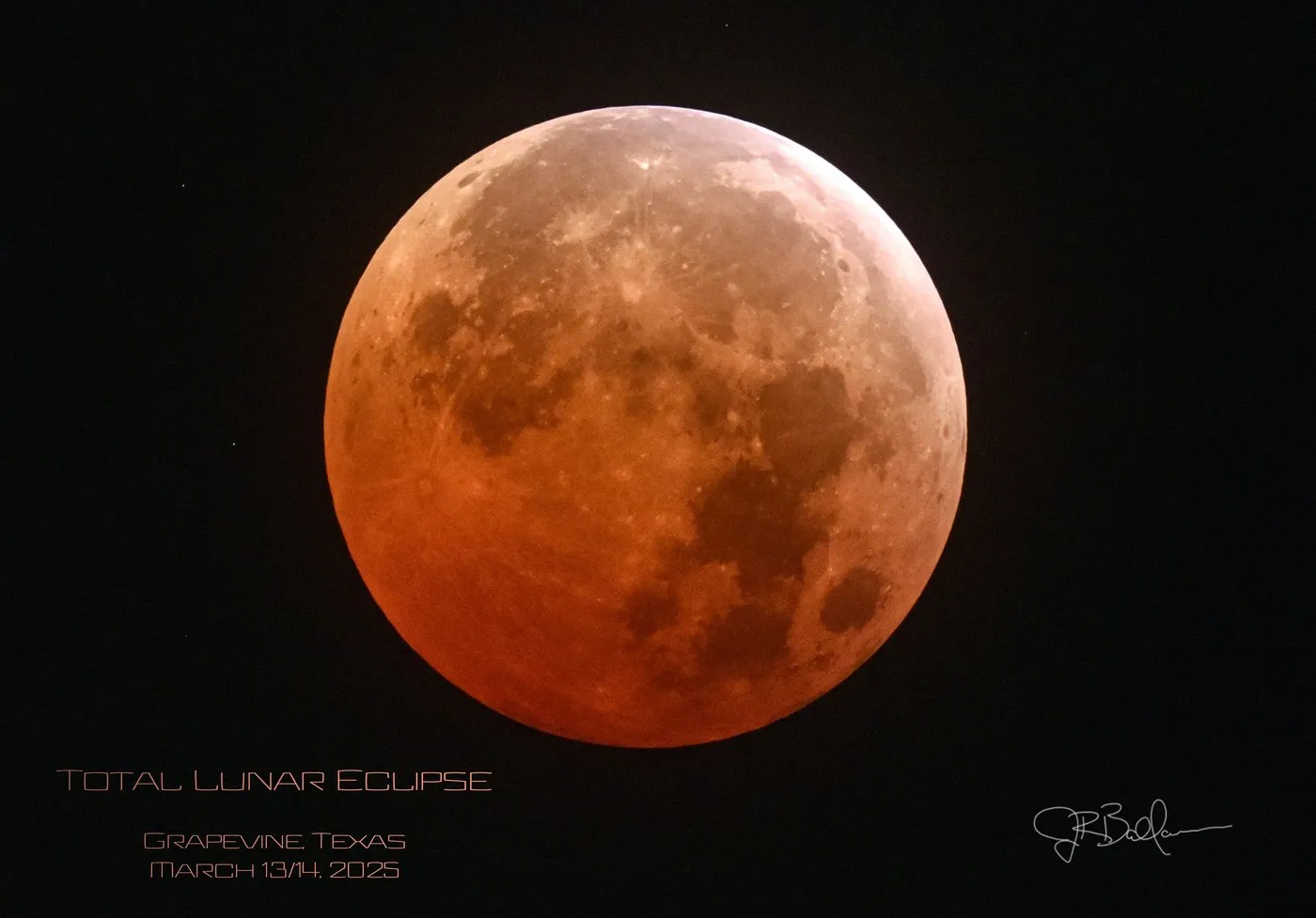
Left: the partial phase, well before totality — still a fast, bright exposure. Right: totality itself, the "Blood Moon" — a much longer exposure to pull detail out of the dim, reddened disk.
That jump in exposure time from one frame to the next is the whole story of a lunar eclipse. During the partial phase, the sunlit crescent is still bright enough to expose in a fraction of a second. But once the moon slides fully into Earth’s umbra, direct sunlight is blocked entirely — what little light reaches the lunar surface has been refracted and reddened by passing through Earth’s atmosphere, the same effect that reddens a sunset. That dim red glow needs a much longer exposure to capture, which is exactly why totality is the most technically demanding part of the sequence to shoot well.
A Second Composite
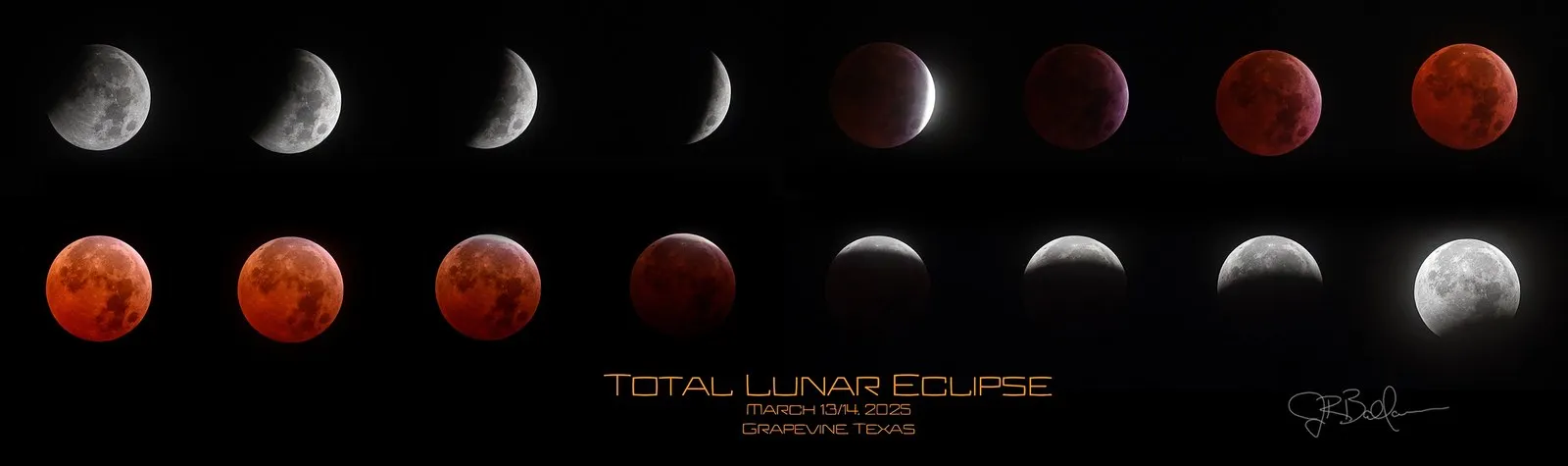
A second, denser arrangement of the same event — sixteen frames stacked in two rows rather than radiating out from a single center like the composite up top. Same eclipse, same night, just a different way of laying out the story.
- What it is
- A total lunar eclipse, sometimes called a "Blood Moon" for the deep red-orange color the fully-eclipsed moon takes on. This one was also nicknamed the "Blood Worm Moon," pairing the eclipse with March's traditional "Worm Moon" full moon name.
- Location observed
- Grapevine, Texas
- Timeline (Central Daylight Time)
- Penumbral phase began 10:57 PM, March 13; partial phase began 12:09 AM; totality lasted 1:26–2:31 AM; partial phase ended 3:52 AM; penumbral phase ended 5:00 AM, all March 14
- Totality duration
- ~65 minutes
- Coordinates
- N/A
This summary was generated by an AI assistant from general astronomical references, not from Jay's own notes on this specific image. Treat every detail above as a starting point for research, not settled fact.